The Communication Gap: Where Dental Practices Lose Patients Without Realizing It

The Communication Gap: Where Dental Practices Lose Patients Without Realizing It
Most dental practices don't lose patients because of poor dentistry. They lose patients because of small moments of friction.
A phone call that goes unanswered.
A patient placed on hold.
A confusing insurance conversation.
A missed appointment reminder.
A callback that never happens.
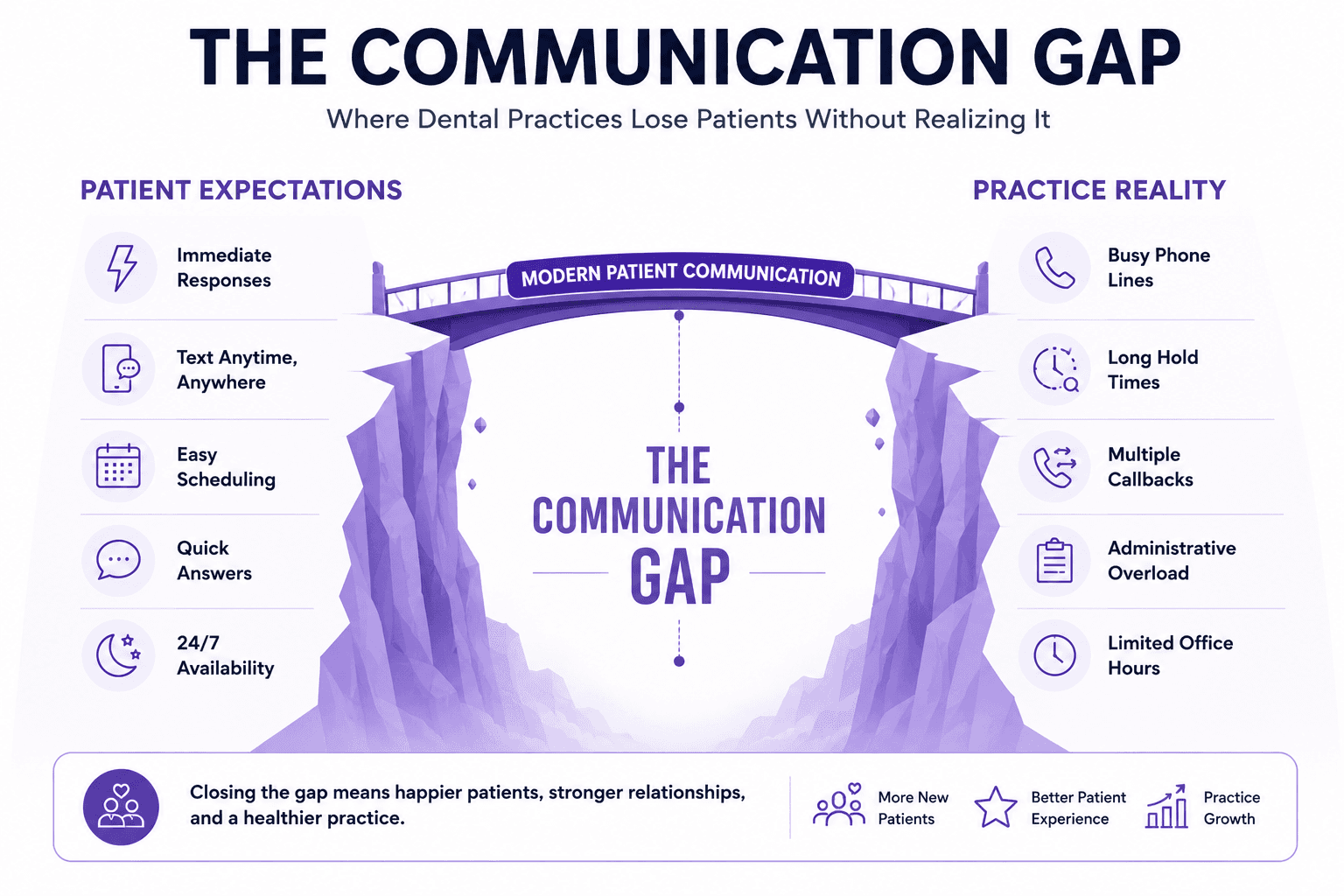
Individually, these moments seem insignificant. Together, they create what we call the Communication Gap. It's the space between what patients expect and what your practice actually delivers. The wider that gap becomes, the harder it is to earn trust, create loyalty, and grow your practice.
The good news?
Unlike many practice challenges, communication friction is measurable and fixable.
What Is the Communication Gap?
The Communication Gap is the difference between the experience patients expect and the experience they receive when interacting with your practice.
Patients today expect communication that's:
Immediate
Convenient
Personalized
Consistent
Available on their schedule
Unfortunately, many dental practices were built around communication systems that were designed for a different era.
Front desk teams work incredibly hard, but they're often expected to answer every call, greet every patient, verify insurance, schedule appointments, manage payments, and solve countless administrative issues all at the same time.
Eventually, something has to wait. Usually, it's the patient.
Why the Communication Gap Is Growing
The gap isn't growing because dental teams care less. It's growing because expectations have changed faster than workflows.
Think about how patients communicate in nearly every other part of their lives.
They can:
Order dinner in seconds.
Book travel instantly.
Chat with customer support.
Track deliveries in real time.
Schedule appointments online.
Then they call a dental office and hear:
"Please hold."
It's no surprise that expectations feel misaligned.
Visualizing the Communication Gap
The difference between what patients expect and what many dental practices are equipped to deliver is what we call the Communication Gap. This simple framework illustrates where that gap exists and why closing it has become one of the biggest opportunities for modern dental practices.
The Five Sources of Communication Friction
Communication friction doesn't usually come from one major issue. It comes from dozens of small interruptions throughout the patient journey.
1. Access Friction
Patients struggle to reach your office.
Examples include:
Missed calls
Long hold times
Limited office hours
No after-hours support
Every unanswered call creates uncertainty.
Sometimes it also creates a new patient for another practice.
2. Scheduling Friction
Making an appointment should be simple.
Instead, patients may experience:
Phone tag
Limited availability
Multiple callbacks
Complicated rescheduling
Scheduling should feel effortless.
3. Information Friction
Patients often have simple questions.
Do you accept my insurance?
How much will this cost?
What should I bring?
Where are you located?
When answers are difficult to find, anxiety increases.
4. Follow-Up Friction
Communication shouldn't stop after treatment.
Without consistent follow-up:
Reviews are missed.
Recall appointments slip away.
Patients feel forgotten.
Long-term relationships depend on continued communication.
5. Internal Friction
Not all communication problems are patient-facing.
Many happen behind the scenes.
Front desk teams constantly switch between:
Phone calls
Walk-in patients
Insurance verification
Scheduling
Payments
Clinical questions
The more interruptions your team experiences, the harder it becomes to provide consistent service.
What Happens When Friction Disappears?
Imagine a practice where:
Patients rarely wait on hold.
Questions are answered quickly.
Appointments are easy to schedule.
Reminders arrive automatically.
The front desk isn't overwhelmed.
Patients feel informed at every step.
Notice something? None of those improvements require better dentistry. They require better communication.
The New Role of the Dental Front Desk
The best front desks no longer spend most of their day reacting. Instead, they spend their time creating relationships.
Technology is taking over repetitive administrative work. People are focusing on empathy. That shift changes everything.
How Annie Helps Close the Communication Gap
The Communication Gap doesn't exist because front desk teams aren't working hard enough. It exists because they're expected to do too much at once.
That's where Annie fits naturally.
Annie helps practices reduce communication friction by answering calls, helping schedule appointments, responding to common patient questions, supporting patients after hours, and assisting with ongoing recall communication.
Instead of replacing your front desk, Annie gives it room to breathe. Routine conversations happen automatically and your team gets more time for the conversations that truly matter. Patients receive faster, more consistent communication throughout their entire journey.
How to Identify Friction in Your Practice
Ask yourself these questions:
How many calls go unanswered each week?
How long do patients wait on hold?
How many callbacks happen every day?
How many appointments are rescheduled because patients couldn't reach someone?
How often does your team feel interrupted?
What questions does your front desk answer over and over again?
Every "yes" points to an opportunity to improve.
Our Final Thoughts
Most practices don't need more patients, they need less friction. Every improvement you make to communication compounds.
Fewer missed calls become more appointments.
Better scheduling becomes happier patients.
Clearer follow-up becomes stronger loyalty.
Reduced interruptions create calmer teams.
Over time, those small improvements become one exceptional patient experience. That's the future Annie believes in.
Not replacing people. Not removing relationships. Simply removing the friction that prevents great dental teams from doing what they do best: caring for patients.
