Dental Patient Retention: 10 Proven Strategies to Keep Patients Coming Back

Dental Patient Retention: 10 Proven Strategies to Keep Patients Coming Back
Keeping existing patients is one of the most effective ways to grow a dental practice.
While attracting new patients often gets the most attention, long-term success depends on how well you retain the patients you already have.
Retained patients schedule regular hygiene visits, accept more treatment, leave reviews, refer friends and family, and provide predictable revenue for your practice. Losing them means spending more money on marketing just to replace the patients who quietly stopped coming.
The good news is that improving dental patient retention isn't usually about making dramatic changes. It's about consistently creating a better patient experience from the first phone call to every appointment that follows.
In this guide, we'll explore why patients leave, what keeps them coming back, and practical strategies every dental practice can implement to improve patient retention.
What Is Dental Patient Retention?
Dental patient retention is the ability of a practice to keep patients returning for ongoing preventive care, restorative treatment, and long-term oral health.
A retained patient doesn't simply visit once. They become an active patient who consistently schedules appointments, follows treatment recommendations, and continues choosing your practice over time.
Strong patient retention benefits nearly every part of a dental practice, including:
More predictable production
Higher hygiene utilization
Increased treatment acceptance
Better online reviews
More referrals
Lower marketing costs
Improved schedule stability
Retention isn't just a patient experience metric. It's a growth metric.
Why Do Dental Practices Lose Patients?
Most patients don't leave because they're unhappy with their dentist. Instead, they slowly drift away.
Life gets busy.
Appointments get postponed.
Phone calls go unanswered.
Reminders get missed.
Scheduling becomes inconvenient.
Eventually, the patient simply disappears. Many retention issues aren't caused by one major mistake. They're caused by dozens of small moments of friction that add up over time.
The Retention Loop
Many practices think patient retention looks like this:
Appointment → Reminder → Appointment
In reality, retention works more like a continuous cycle.
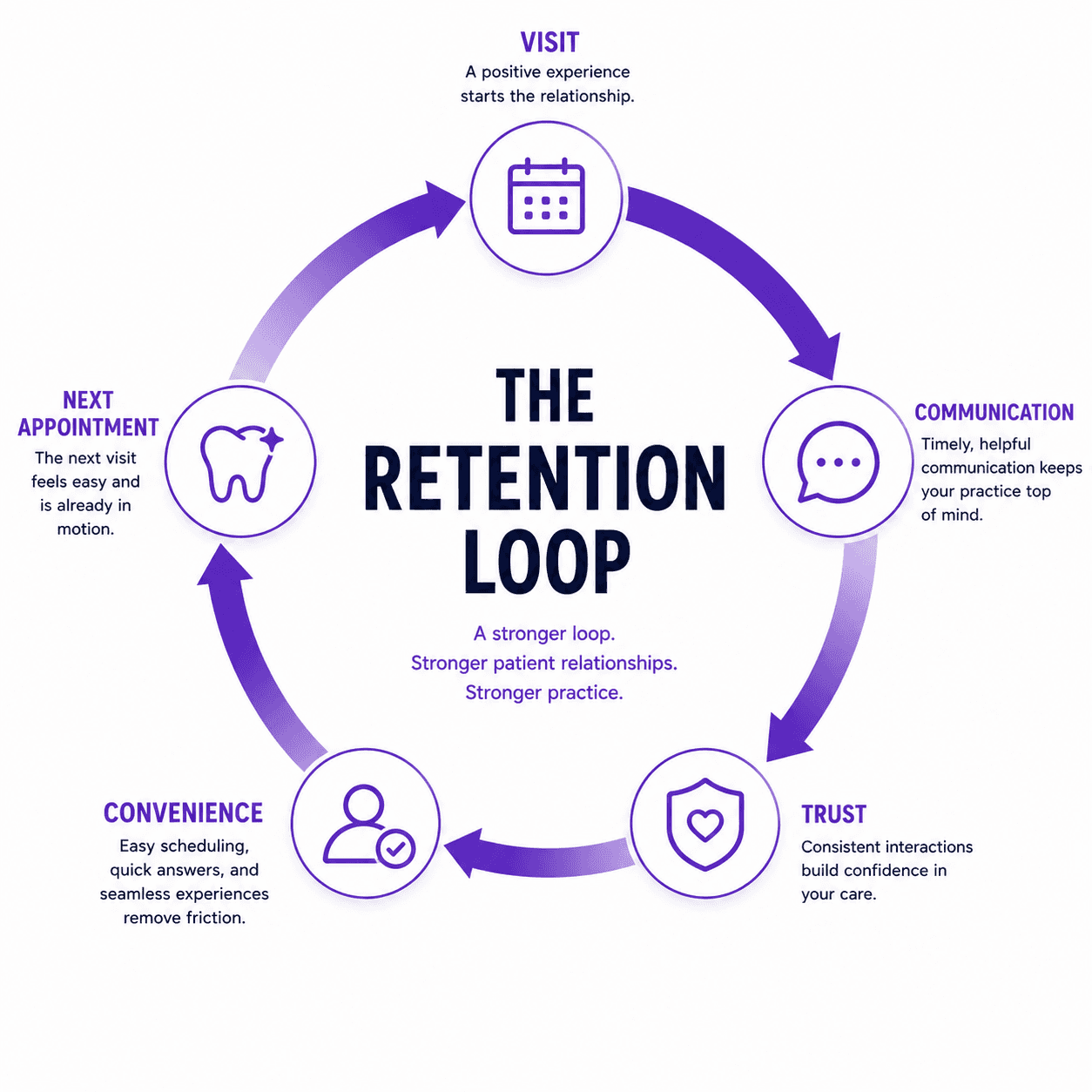
Every successful patient relationship moves through this loop repeatedly.
When communication is consistent, scheduling is easy, and patients trust your office, the loop continues naturally.
When one part of the loop breaks, patients become more likely to postpone—or completely miss—their next visit.
10 Proven Ways to Improve Dental Patient Retention
1. Schedule the Next Appointment Before Patients Leave
The easiest appointment to book is the one scheduled before a patient walks out the door. Every patient who leaves without another appointment introduces another opportunity for life to get in the way. Whenever possible, have hygiene patients leave with their next visit already scheduled.
2. Make Scheduling Easy
Patients expect convenience. If scheduling requires multiple phone calls, waiting on hold, or playing voicemail tag, patients are more likely to delay booking.
Offer multiple ways to schedule, confirm, or reschedule appointments. The less effort required, the more likely patients are to return.
3. Never Miss a Phone Call
For many patients, the phone call is still their first real interaction with your practice. A missed call doesn't just represent a missed appointment. It may be the beginning of a patient relationship that never happens.
Consistently answering calls, or following up immediately, helps patients feel valued before they ever step into the office.
4. Build Better Recall and Recare Systems
A strong dental recare program keeps preventive care top of mind. Patients shouldn't have to remember when they're due.
Automated reminders, follow-up messages, and personalized outreach help patients maintain healthy routines while improving retention.
5. Communicate Between Visits
The patient relationship shouldn't disappear for six months between hygiene appointments.
Simple communication like appointment reminders, educational tips, seasonal messages, or follow-up texts helps keep your practice top of mind. Patients are more likely to stay connected when they regularly hear from you.
6. Reduce Friction at Every Step
Patients appreciate practices that respect their time.
Look for opportunities to simplify:
Online forms
Insurance questions
Appointment confirmations
Check-in
Scheduling
Payments
Removing small frustrations creates a noticeably better patient experience.
7. Create Consistency
Patients build trust through consistency. Every interaction should feel professional, friendly, and predictable.
Whether patients speak with your office on Monday morning or Saturday evening, the experience should reflect the same standard of care.
8. Personalize the Experience
Remembering birthdays, family members, treatment history, or personal preferences helps patients feel like people instead of appointments. Personalization creates emotional loyalty that competitors struggle to replace.
9. Ask for Feedback
Retention improves when practices learn why patients stay and why they leave. Short surveys, online reviews, and post-appointment feedback help identify small issues before they become larger problems. Continuous improvement strengthens the patient experience over time.
10. Invest in Better Communication
Almost every retention strategy comes back to communication.
Patients want:
Quick answers.
Easy scheduling.
Reliable reminders.
Helpful follow-up.
When communication improves, retention naturally follows.
How Technology Helps Improve Patient Retention
Modern dental practices increasingly use technology to reduce communication bottlenecks and create a smoother patient experience.
Automation can assist with:
Answering incoming calls
Scheduling appointments
Appointment confirmations
Recare reminders
Insurance questions
Frequently asked questions
After-hours communication
The goal isn't replacing people. It's ensuring patients always receive timely, consistent communication while giving your front desk more time to focus on the patients already in the office.
Where Annie Fits
Patient retention depends on creating great experiences over months and years—not just during one appointment.
Annie helps practices strengthen those experiences by answering every call, assisting with scheduling, handling routine patient questions, and supporting ongoing communication before and after appointments.
Rather than adding more work to your front desk, Annie helps remove communication bottlenecks that often lead to missed appointments and lost patients.
Signs Your Practice May Have a Patient Retention Problem
If any of these sound familiar, it may be time to evaluate your retention strategy:
Patients frequently disappear after their first visit.
Hygiene schedules have unexpected gaps.
Recare lists continue growing.
Staff spend significant time making reminder calls.
Patients regularly miss or cancel appointments.
Marketing generates new patients, but long-term growth remains slow.
Retention problems often develop gradually, making them difficult to notice until they begin affecting production.
Measuring Dental Patient Retention
Every practice should regularly monitor key retention metrics, including:
Metric | Why It Matters |
|---|---|
Active patient count | Indicates overall patient health |
Recare completion rate | Measures preventive care consistency |
No-show rate | Identifies scheduling challenges |
Cancellation rate | Reveals patient engagement |
Time since last visit | Highlights patients at risk of leaving |
New patient return rate | Measures first-visit success |
Tracking these numbers over time helps practices identify opportunities before patients are permanently lost.
Our Final Thoughts
The best dental practices don't grow by constantly replacing lost patients. They grow by creating experiences patients want to return to.
Strong communication.
Simple scheduling.
Consistent follow-up.
Convenient care.
Each interaction strengthens the relationship and makes the next appointment feel like the natural next step.
Patient retention isn't built through one extraordinary experience. It's built through hundreds of small moments that consistently show patients your practice values their time, their trust, and their oral health.
