Why Every Dental Practice Should Measure Response Time

Why Every Dental Practice Should Measure Response Time
Most dental practices track dozens of performance metrics.
Production
Collections
Case acceptance
No-show rates
New patient volume
Those numbers help measure the health of a practice. But there's one metric that quietly influences all of them and many practices never measure it.
Response time.
How quickly does your practice respond when a patient reaches out?
Whether someone calls your office, submits a website form, sends a text message, or leaves a voicemail, the time between their request and your response shapes everything that follows.
Patient trust
Appointment conversion
Practice growth
Team workload
Response time isn't just a customer service metric anymore. It's a growth metric.
What Is Response Time?
Response time is the amount of time it takes your practice to acknowledge and assist a patient after they initiate contact.
That first interaction may happen through:
A phone call
A website inquiry
A text message
An online scheduling request
A voicemail
An email
Patients don't usually measure response time with a stopwatch. They simply notice whether your practice feels responsive or difficult to reach. That perception becomes part of your brand.
Why Response Time Matters More Than Ever
Patient expectations have changed dramatically over the past decade.
Consumers can:
Order groceries in minutes.
Schedule transportation instantly.
Chat with customer support in real time.
Book travel without speaking to anyone.
Those experiences shape expectations everywhere, including healthcare. When patients decide it's time to contact a dentist, they don't expect perfection. They expect responsiveness. The practices that respond quickly create confidence before a patient ever walks through the door.
Response Time Influences Every Stage of the Patient Journey
Many practices think response time only affects new patient calls. In reality, it impacts the entire patient experience.
New Patient Acquisition
When a prospective patient contacts your office, they are actively looking for care. A quick response keeps that momentum moving whereas a delayed response gives them time to contact another practice.
Appointment Scheduling
Scheduling should feel simple. Long waits, repeated callbacks, and delayed confirmations create unnecessary friction before treatment even begins.
Emergency Care
For patients experiencing pain or uncertainty, responsiveness communicates reassurance. Even if treatment cannot happen immediately, a timely response reduces anxiety.
Existing Patient Relationships
Patients continue evaluating your practice long after their first appointment. Fast responses to questions, scheduling requests, and follow-up communication reinforce trust over time.
The Hidden Cost of Slow Response Times
Slow response times rarely appear on financial reports. But they create measurable business consequences.
Missed Opportunities
Patients don't always wait. If they cannot reach your office, many simply contact another provider.
Lower Marketing ROI
Every marketing dollar is intended to generate patient inquiries. If inquiries are not answered promptly, those marketing investments become less effective.
Increased Front Desk Stress
Delayed communication creates more callbacks, more interruptions, and more unfinished work. Instead of reducing workload, slow responses often cause administrative tasks to accumulate.
Reduced Patient Satisfaction
Patients rarely remember every detail of their appointment. They remember how easy or difficult it was to receive care. Communication plays a major role in that perception.
Introducing the Response Time Score
Most practices don't need dozens of communication metrics. They need one simple benchmark. We call it the Response Time Score.
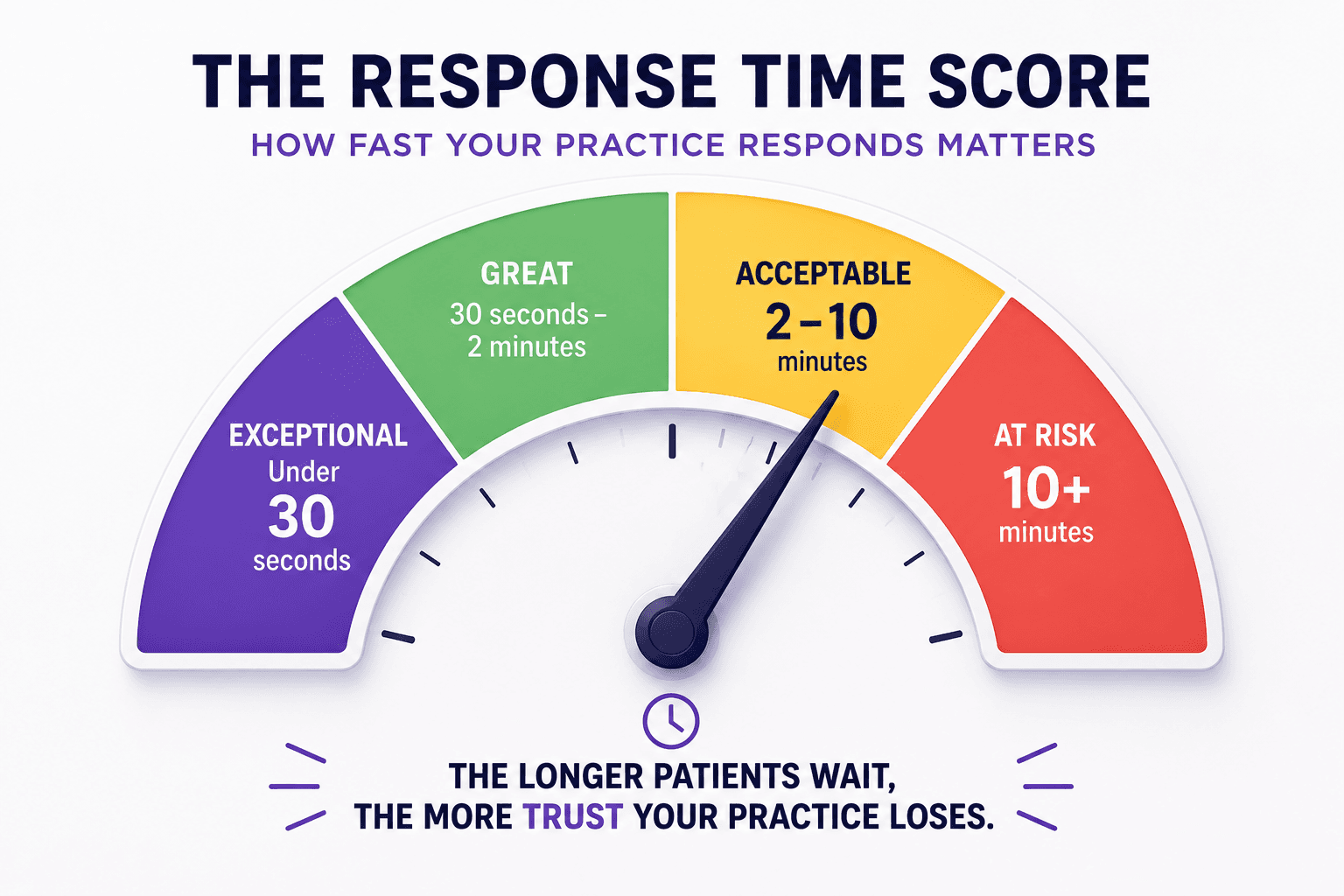
The longer patients wait, the more trust your practice loses.
This isn't a scientific standard. It's a practical framework designed to help practices think about responsiveness from the patient's perspective. Patients don't compare your office to another dental practice. They compare it to every other experience they have throughout the day.
What Slows Response Time?
Most delays aren't caused by poor employees. They're caused by competing priorities.
At any moment, a front desk team may be:
Greeting arriving patients.
Answering multiple phone calls.
Verifying insurance.
Collecting payments.
Helping providers.
Scheduling appointments.
Responding to text messages.
Managing emergencies.
Even highly organized teams eventually reach capacity. When everything demands immediate attention, someone inevitably waits.
How Leading Practices Improve Response Time
Improving response time isn't about asking employees to work faster. It's about reducing unnecessary delays.
Leading practices focus on:
Answering more calls on the first attempt.
Simplifying scheduling.
Reducing callbacks.
Providing patients with faster access to information.
Creating consistent communication throughout the day.
Small improvements often have a larger impact than practices expect.
How Annie Helps Improve Response Time
Response time is one of the simplest ways to improve the patient experience. That's why Annie was designed to help practices respond when patients are ready, not only when the front desk has a free moment.
By answering calls, assisting with appointment scheduling, responding to common patient questions, and supporting patients after hours, Annie helps practices dramatically reduce communication delays.
Routine conversations receive immediate attention. Your team gains more time to focus on the patients already in the office. The result isn't simply faster communication.
It's a more consistent patient experience from the very first interaction.
Measuring Your Practice's Response Time
Many practices have never measured how responsive they actually are. A simple exercise can reveal surprising insights.
Over the next week, track:
How many calls reach voicemail.
Average hold time.
Average callback time.
Time to respond to website inquiries.
Time to answer text messages.
Number of patients requiring multiple follow-ups.
Patterns often emerge quickly. Those patterns become opportunities.
Our Final Thoughts
Dental practices spend significant time improving clinical outcomes. Modern practices are also improving communication outcomes. Response time may seem like a small operational detail.
In reality, it influences patient trust, scheduling, marketing effectiveness, front desk workload, and long-term practice growth.
Patients may never ask how quickly your office responds. They'll simply remember how easy it was to get the care they needed.
In today's dental landscape, that experience often begins long before the first appointment. Sometimes, it begins with nothing more than how quickly someone answers.
