The Invisible Waiting Room: The Hidden Delays That Shape Every Dental Patient's Experience

The Invisible Waiting Room: The Hidden Delays That Shape Every Dental Patient's Experience
When most dental practices think about reducing wait times, they think about the waiting room.
How long are patients sitting before they're called back?
How quickly are providers staying on schedule?
How efficient is check-in?
Those questions matter, but they're only part of the story. Today's biggest waiting room often isn't inside your office at all. It's invisible.
Patients are waiting long before they ever walk through your doors, and those invisible waits may have a bigger impact on your practice than the few minutes they spend in your reception area.
What Is the Invisible Waiting Room?
The Invisible Waiting Room is every moment a patient spends waiting for your practice to respond.
Unlike the chairs in your lobby, these moments are easy to overlook because they happen outside your office.
Patients may be waiting:
On hold during a phone call.
For someone to call them back.
For an answer about insurance.
For appointment availability.
For confirmation that their appointment is scheduled.
For post-treatment instructions.
For a response to a text message.
For their next hygiene appointment.
Each delay is small on its own. Together, they shape how patients experience your practice.
Waiting Has Changed
Twenty years ago, waiting usually meant sitting in a reception area with a magazine. Today, waiting happens everywhere.
Patients expect immediate access to information because that's what they've become accustomed to in nearly every other part of life.
They can:
Order groceries in minutes.
Schedule a rideshare instantly.
Chat with customer support online.
Track deliveries in real time.
Then they call a dental office and spend five minutes on hold. Or leave a voicemail. Or wait until tomorrow for a callback.
The waiting room didn't disappear. It moved.
Every patient moves through a series of communication touchpoints before, during, and after treatment. At each stage, there's an opportunity to either build trust or create an invisible wait. The framework below illustrates where those hidden delays most commonly occur.
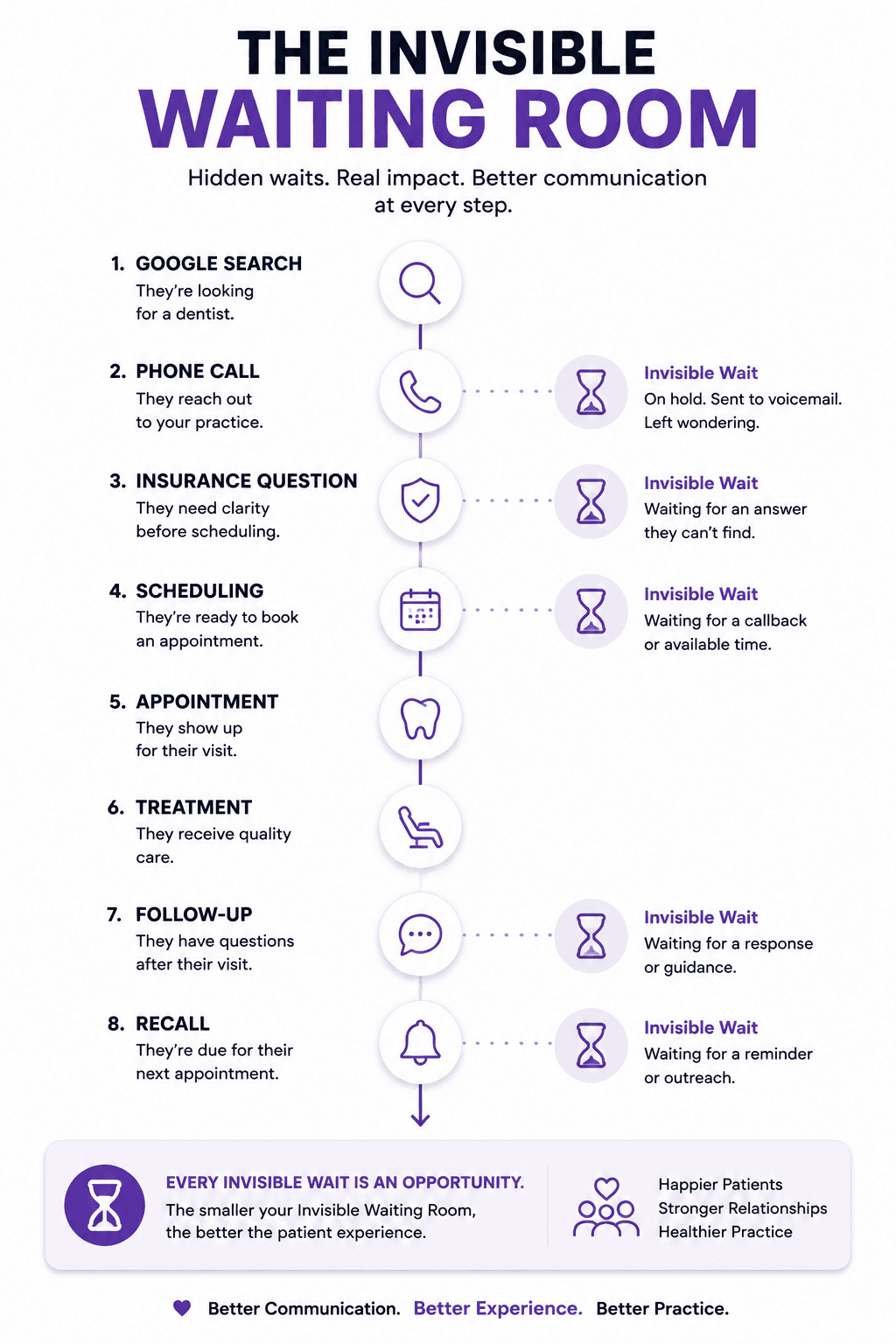
Every Invisible Wait Creates Friction
Patients rarely remember a single hold time. They remember how easy or difficult it felt to get the care they needed. Invisible waiting creates friction throughout the patient journey.
Waiting to Schedule
A prospective patient decides to call your office.
They're ready to book.
Instead, they:
Reach voicemail.
Wait on hold.
Leave a message.
Hope someone calls back.
Some will. Others won't. Many simply call the next practice.
Waiting for Answers
Patients often have simple questions.
Do you accept my insurance?
How much will this visit cost?
Can my child be seen this week?
What should I bring?
Every unanswered question delays confidence. The longer patients wait, the more likely they are to continue searching elsewhere.
Waiting Between Visits
Communication often slows after treatment.
Patients wait for:
Follow-up instructions.
Recall reminders.
Treatment plan discussions.
Future scheduling.
Those delays don't just create frustration. They weaken relationships.
The Cost of the Invisible Waiting Room
Most practices think waiting affects patient satisfaction. It does, but it affects much more than that.
Invisible waiting impacts:
New Patient Conversion
Every unanswered call creates another opportunity for a competing practice.
Patient Trust
Fast communication tells patients:
"We're here when you need us."
Long delays suggest the opposite, even if unintentionally.
Team Stress
Invisible waiting creates visible stress.
Callbacks pile up.
Sticky notes accumulate.
Voicemails grow.
The front desk spends the day reacting instead of helping patients.
Practice Growth
Small communication delays compound over time.
Missed appointments.
Lower retention.
Fewer referrals.
Reduced treatment acceptance.
Growth doesn't disappear overnight. It slowly leaks away through dozens of tiny moments of waiting.
Why Invisible Waiting Exists
It's easy to blame busy schedules, but that's rarely the real problem. Most dental front desk teams are incredibly capable.
They're simply managing more communication than one person, or even two people, can reasonably handle.
At any given moment, they're:
Greeting arriving patients.
Answering incoming calls.
Scheduling appointments.
Collecting payments.
Verifying insurance.
Helping providers.
Responding to texts.
Managing emergencies.
Every interruption creates another invisible wait for someone else.
Shrinking the Invisible Waiting Room
The goal isn't to eliminate every wait. Healthcare will always involve some uncertainty. The goal is to eliminate unnecessary waiting.
Leading dental practices are reducing invisible waiting by making communication faster, more proactive, and more consistent.
That includes:
Answering more calls the first time.
Offering convenient scheduling options.
Providing proactive appointment reminders.
Responding to common patient questions quickly.
Keeping patients informed throughout their care.
When communication improves, waiting naturally decreases.
How Annie Helps Eliminate Invisible Waiting
The Invisible Waiting Room doesn't exist because your team isn't working hard enough. It exists because they're being asked to manage an impossible number of conversations simultaneously.
That's where Annie fits naturally.
Annie helps shrink the Invisible Waiting Room by answering calls, assisting with appointment scheduling, responding to common patient questions, supporting patients after hours, and helping practices maintain consistent communication throughout the patient journey.
Rather than replacing your front desk, Annie extends it. Routine conversations happen immediately. Patients spend less time waiting.
Your team spends more time creating meaningful in-person experiences.
Is Your Practice Creating an Invisible Waiting Room?
Ask yourself:
How many calls reach voicemail each day?
How long do patients typically wait on hold?
How many callbacks are still outstanding at the end of the day?
How quickly are insurance questions answered?
How often do patients follow up because they haven't heard back?
If those questions make you uncomfortable, your waiting room may be much larger than you think.
The good news?
It's one of the easiest parts of the patient experience to improve.
Our Final Thoughts
The waiting room has changed. It's no longer defined by comfortable chairs, fresh coffee, or a television on the wall.
Today's waiting room exists in unanswered phone calls, delayed callbacks, unanswered texts, and missed opportunities to communicate.
The practices that thrive over the next decade won't simply reduce the wait inside the office. They'll reduce the invisible waiting that happens before and after every appointment.
Because every minute a patient spends waiting for communication is another chance for trust to fade. And every minute you give back becomes part of a patient experience they'll remember.
The most successful dental practices won't have the smallest waiting room. They'll have the smallest Invisible Waiting Room.
