The Complete Guide to Dental Patient Communication (2026 Edition)

The Complete Guide to Dental Patient Communication (2026 Edition)
Patient communication has never been more important.
Today's dental patients expect the same convenience they experience everywhere else in their lives. They want immediate responses, flexible scheduling, clear communication, and personalized service from the moment they discover your practice to long after they leave the office.
At the same time, dental front desk teams are busier than ever. Between answering phones, checking in patients, verifying insurance, confirming appointments, and managing schedules, communication often becomes reactive instead of intentional.
The practices that stand out today aren't simply providing outstanding dentistry. They're creating outstanding communication.
This guide explores what modern dental patient communication looks like, why it matters, and how leading dental practices are building systems that create exceptional experiences at every stage of the patient journey.
What Is Dental Patient Communication?
Dental patient communication includes every interaction between your practice and your patients before, during, and after treatment.
It isn't limited to phone calls.
It includes:
Phone conversations
Text messages
Appointment scheduling
Appointment reminders
Email communication
Insurance questions
Treatment discussions
Post-operative instructions
Hygiene recare
Billing conversations
Follow-up care
Every interaction shapes how patients perceive your practice. Great communication builds trust while poor communication creates friction.
Why Dental Patient Communication Matters
Communication is often the first experience a patient has with your office.
Before they meet your team...
Before they see your office...
Before they experience your clinical care...
They experience your communication.
Strong dental patient communication leads to:
Higher patient satisfaction
Better online reviews
More new patient conversions
Higher treatment acceptance
Improved patient retention
Fewer missed appointments
Stronger referrals
In many ways, communication is your practice's first form of patient care.
The Dental Patient Communication Flywheel
Rather than thinking about communication as individual tasks, modern dental practices think of it as a continuous cycle.
Every conversation creates momentum for the next one.
The Dental Patient Communication Flywheel looks like this:
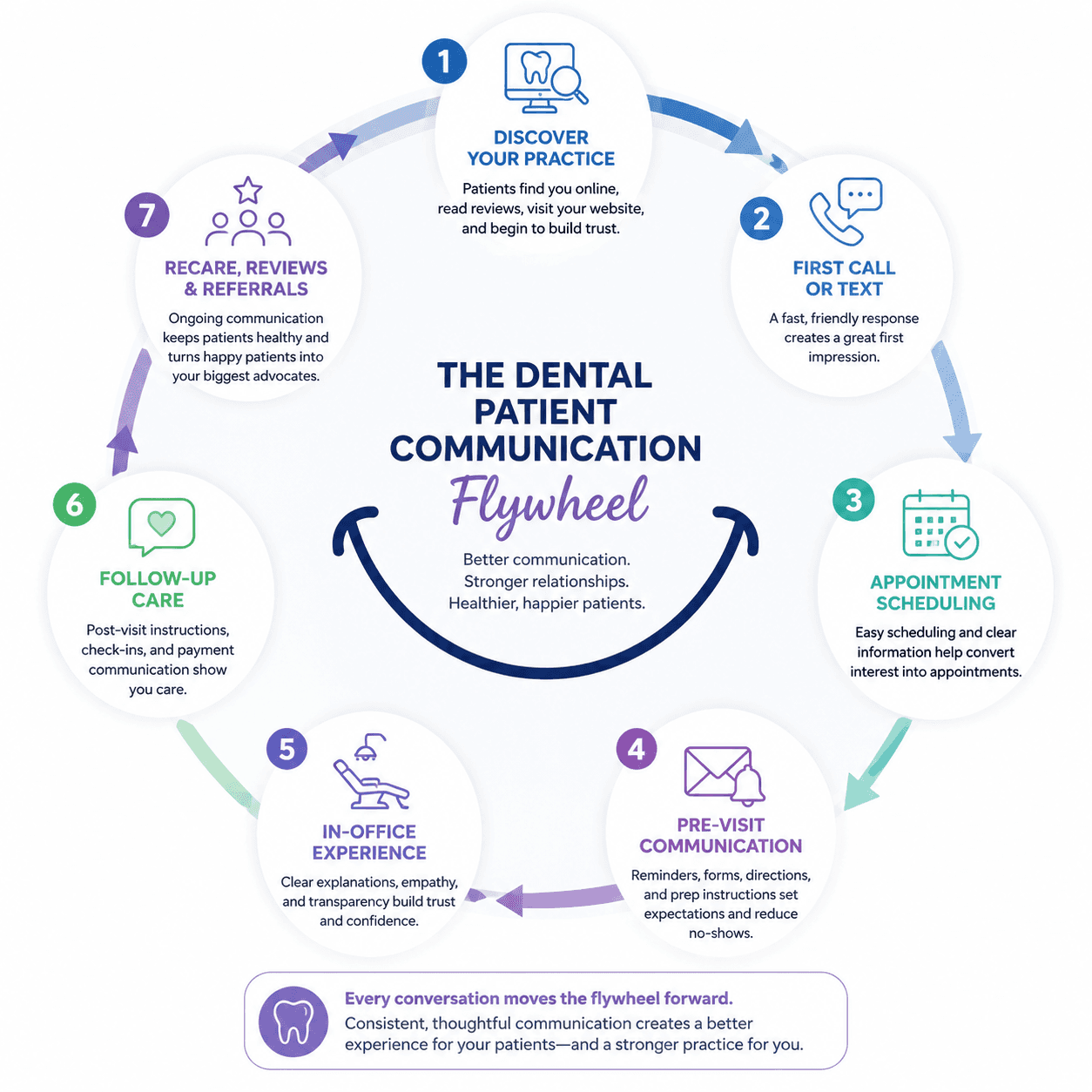
When communication is strong at every stage, patients are more likely to remain loyal, return for future care, and recommend your practice to others.
Let's look at each stage more closely.
Stage 1: Discovery
Long before someone becomes a patient, they're researching.
They may:
Search Google
Read reviews
Visit your website
Browse social media
Ask friends for recommendations
Eventually, most patients have one question:
"Should I contact this office?"
That decision often comes down to trust.
Stage 2: The First Conversation
The first phone call is one of the most important moments in the patient journey.
Prospective patients often call to ask:
Do you accept my insurance?
Are you accepting new patients?
How soon can I get in?
What should I expect?
How quickly, and how professionally, you respond can determine whether that patient schedules with your practice or your competitor.
That's why many modern dental practices use communication platforms like Annie. By answering calls promptly, assisting with scheduling, and helping patients get the information they need, Annie helps practices create outstanding first impressions without placing additional strain on the front desk.
Stage 3: Before the Appointment
Communication shouldn't stop once an appointment is scheduled.
Patients appreciate proactive communication such as:
Appointment confirmations
Reminder texts
Online forms
Driving directions
Pre-appointment instructions
These small touchpoints reduce anxiety while decreasing cancellations and no-shows.
Stage 4: During the Visit
Communication continues throughout the appointment.
Patients value practices that:
Explain procedures clearly
Discuss treatment options openly
Answer questions patiently
Set expectations honestly
Communicate costs transparently
Clinical excellence is essential. Clear communication makes that excellence easier for patients to understand and appreciate.
Stage 5: After the Appointment
One of the biggest communication mistakes dental practices make is disappearing after treatment.
Great follow-up includes:
Post-operative instructions
Wellness check-ins
Payment communication
Review requests
Follow-up scheduling
These interactions show patients that your practice cares about more than completing procedures.
Stage 6: Recare & Recall
Patient relationships aren't built one appointment at a time.
They're built over years.
Consistent hygiene recall communication helps patients stay healthy while creating predictable growth for your practice.
Modern practices increasingly automate portions of their recall process to ensure patients never slip through the cracks. Annie helps support these ongoing conversations by assisting with recall outreach, appointment scheduling, and patient follow-up, making long-term communication more consistent without creating additional administrative work.
Stage 7: Reviews & Referrals
Happy patients become your best marketing channel, but referrals rarely happen by accident.
Practices that consistently communicate well throughout the patient journey naturally generate:
More Google reviews
More online recommendations
More word-of-mouth referrals
Higher patient loyalty
Exceptional communication creates memorable experiences, and memorable experiences create advocates.
The Biggest Communication Mistakes Dental Practices Make
Even excellent practices can unintentionally create communication bottlenecks.
Some of the most common include:
Long hold times
Missed phone calls
Slow callbacks
Inconsistent messaging
Limited texting options
Confusing insurance conversations
Manual recall systems
Poor after-hours communication
These issues rarely stem from a lack of effort.
More often, they happen because front desk teams are overwhelmed by the volume of communication they're expected to manage every day.
How Technology Is Changing Dental Patient Communication
Technology isn't replacing patient relationships.
It's strengthening them.
Modern communication tools help practices:
Answer more calls
Schedule patients faster
Confirm appointments automatically
Respond after hours
Manage recall outreach
Reduce administrative burden
Improve consistency
Solutions like Annie allow front desk teams to spend less time repeating routine administrative tasks and more time creating meaningful patient interactions.
The goal isn't less human communication. It's better human communication.
Measuring Communication Success
Improving communication starts with measuring it.
Consider tracking metrics such as:
Call answer rate
Average response time
Appointment conversion rate
No-show rate
Patient satisfaction
Online review volume
Recall completion rate
Small improvements across these metrics often have a significant impact on both patient experience and practice growth.
The Future of Dental Patient Communication
The practices leading dentistry into the future aren't simply investing in new technology.
They're investing in better experiences.
Patients increasingly expect communication that is:
Immediate
Convenient
Personalized
Consistent
Available beyond traditional office hours
The practices that meet those expectations will be the ones patients choose, trust, and recommend.
Our Final Thoughts
Dental patient communication isn't a single phone call, reminder, or follow-up email. It's the thread that connects every stage of the patient journey.
From the first interaction to years of ongoing care, communication shapes how patients experience your practice and whether they choose to return.
That's why Annie was built around a simple philosophy: every patient deserves exceptional communication.
By helping practices answer calls, schedule appointments, support patients after hours, manage recall, and reduce the burden on busy front desk teams, Annie helps create communication that's responsive, consistent, and genuinely patient-centered.
The future of dentistry won't be defined by technology alone.
It will be defined by practices that communicate better than everyone else.
